

1. The short version
If you drive to work in Lilongwe, most of what the trip costs you is fuel. And most of the seats in your car are probably empty. Sharing those seats does not make the trip cheaper to run. It splits the same cost between more people.
This article works through the numbers for one ordinary commute, using the current regulated pump price and published fuel and emission figures. Every figure has a source, listed at the end. Where we make an assumption, we say so.
MK 5,619
Maximum pump price for a litre of petrol, in force since June 2026. [5]
≈ MK 399
Fuel cost per kilometre for a car using 7.1 litres per 100 km. [8]
1.1
Average people per car on commuting trips in England in 2025. [11]
2. What fuel costs today
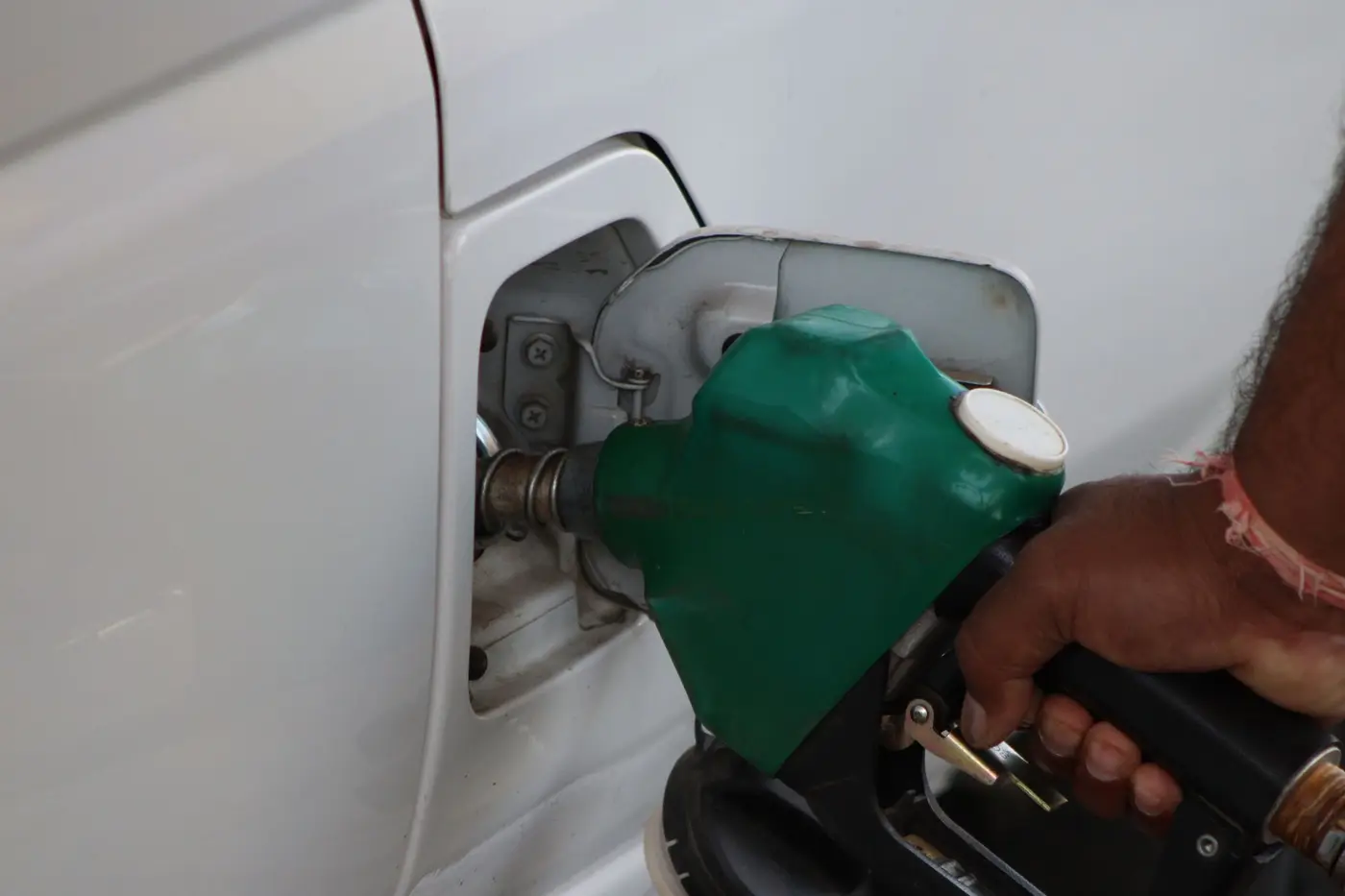
Pump prices in Malawi are set by the Malawi Energy Regulatory Authority (MERA). After holding at MK 2,530 a litre from November 2023[7], petrol was raised to MK 3,499 in October 2025[1] and to MK 4,965 in January 2026[2]. It peaked at MK 6,672 in April[3] before two cuts brought it to MK 5,619 a litre in June[4][5], where the September review left it[6].
| Effective from | Petrol, MK per litre | Source |
|---|---|---|
| 10 November 2023 | 2,530 | [7] |
| 1 October 2025 | 3,499 | [1] |
| 20 January 2026 | 4,965 | [2] |
| 1 April 2026 | 6,672 | [3] |
| 8 May 2026 | 6,209 | [4] |
| 19 June 2026 | 5,619 | [5] |
| September 2026 review | 5,619 (unchanged) | [6] |
That is more than double the price of two years ago: MK 5,619 is 122% above MK 2,530. Diesel has followed a similar path and stood at MK 5,863 a litre at the September review[6].
A note on dates. MERA now reviews prices about once a month, so check mera.mw for the latest figure. The sums below use the September 2026 price. If the price moves, the costs move with it.
3. What one commute really costs
Take a route many people drive every day: Area 25 to City Centre, about 12 km each way.
We need one assumption: how much fuel the car uses. The International Energy Agency puts the average rated consumption of new cars worldwide at 7.1 litres per 100 km[8]. Older cars and stop-start traffic usually use more, so treat this as a careful, low-end estimate.
- Per kilometre: 0.071 litres × MK 5,619 = about MK 399.
- One way (12 km): 0.85 litres, about MK 4,790.
- There and back (24 km): 1.7 litres, about MK 9,575 a day.
- A month of 22 working days: about 37.5 litres, or roughly MK 210,600.
That is fuel alone. It leaves out tyres, servicing, insurance and parking. Drive alone and you carry all of it.
4. What happens when you fill the seats
On Car Share, the most a driver may ask per seat is the distance multiplied by a fixed rate. In Malawi that rate is MK 130 per km, so a 12 km trip is capped at MK 1,560 a seat. Many drivers ask less. In the app’s own example this route is offered at MK 1,200.
Here is the one-way trip again, with the same MK 4,790 of fuel:
| Passengers at MK 1,200 | Driver receives | Fuel left for the driver |
|---|---|---|
| None (driving alone) | MK 0 | MK 4,790 |
| 1 passenger | MK 1,200 | MK 3,590 |
| 2 passengers | MK 2,400 | MK 2,390 |
| 3 passengers | MK 3,600 | MK 1,190 |
With three seats filled, the driver’s own fuel bill for the trip falls by about three quarters. Over a month of return trips that is roughly MK 158,400 recovered out of MK 210,600.
Notice what does not happen: the driver never comes out ahead. Even with three passengers paying the full cap of MK 1,560, the driver receives MK 4,680, which is still less than the fuel. That is the point of the cap. It keeps a shared ride as cost sharing, not a business.
5. The passenger’s side
For a passenger the sum is simpler. At MK 1,200 a seat, a return trip is MK 2,400 a day, or MK 52,800 over 22 working days. The price is shown before you request the seat, it cannot go above the cap, and you pay the driver in cash at pickup. Car Share takes no commission, so all of it goes towards the fuel.
How does that compare with a minibus? We do not have a reliable published figure for current Lilongwe fares, so we will not guess. What researchers do say is that operators adjust fares when fuel prices change. A 2024 city report notes that “transportation costs rise along with the rises in fuel”[14]. A capped, per-kilometre contribution is at least predictable: the same route has the same ceiling every day.
6. Less fuel, less CO₂
Burning a litre of petrol releases about 2.35 kg of CO₂[9][10]. Our 24 km return commute burns 1.7 litres, so it puts roughly 4 kg of CO₂ into the air each day, or about 88 kg over a working month.
Sharing the car does not change what that car emits. It changes how many cars make the trip. If one passenger would otherwise have driven the same route alone, that is 4 kg a day that is never emitted. Split between four people, the same journey works out at about 1 kg each.
The scale adds up. The International Energy Agency has estimated that raising average car occupancy by around half on one in ten trips in advanced economies, together with more efficient driving, could save about 470,000 barrels of oil a day[15].
7. Why most cars travel nearly empty
We could not find published occupancy figures for Lilongwe. Where they are measured, commuting is the emptiest kind of car trip. In England, cars on commuting trips carried an average of 1.1 people in 2025, against 1.5 across all trips[11]. In other words, most commuting cars carry a driver and nobody else.
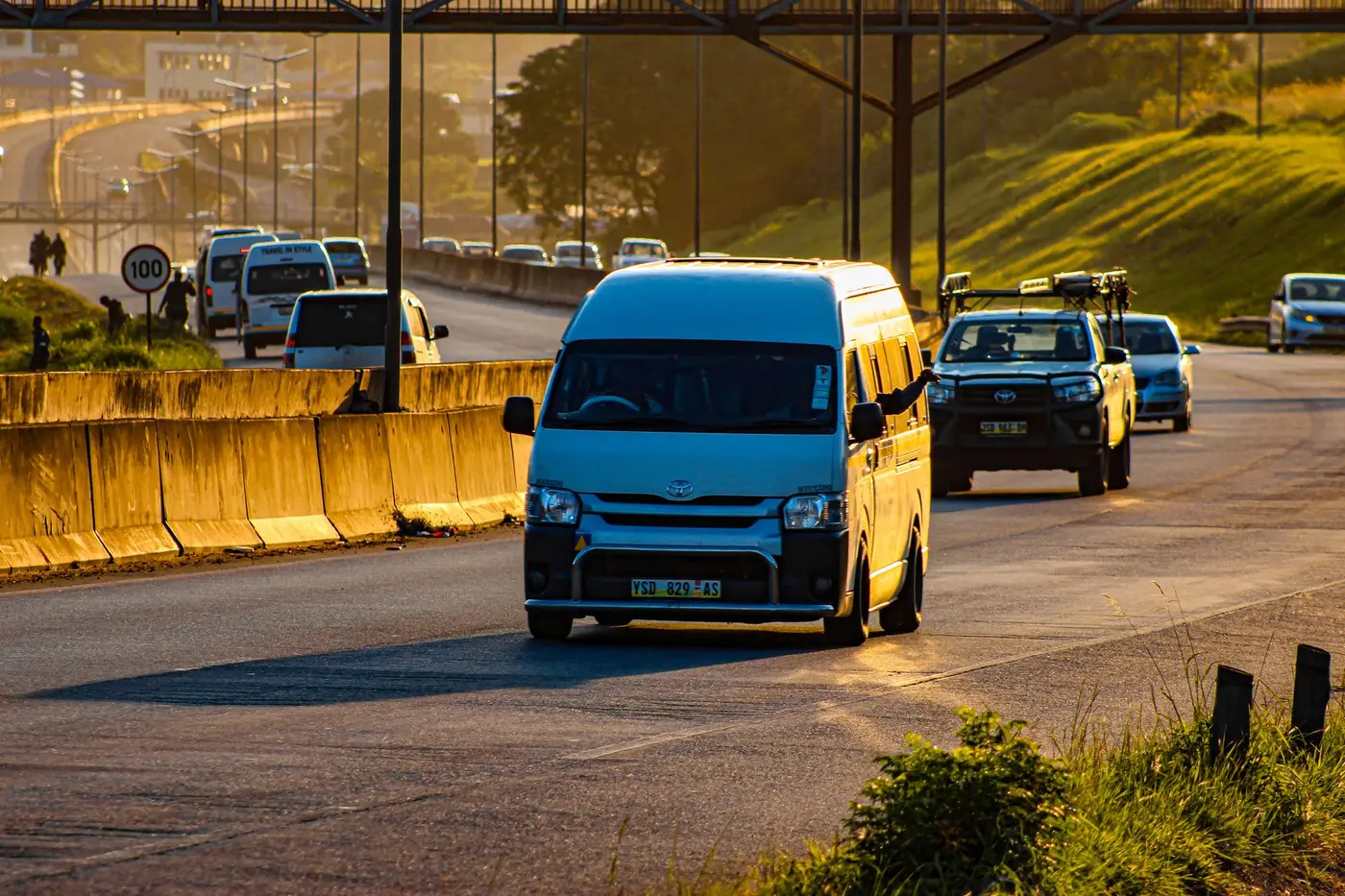
Lilongwe has grown quickly. The 2018 census counted 989,318 people in the city, with growth of 3.8% a year over the previous decade[12]. Most residents do not drive: an older UN-Habitat profile found about 32% relied on minibuses and that “many people however still walk to their various places of work”[13]. More recent research describes how “low densities combined with mounting traffic congestion have increased commute times”[14].
Put those together and the opportunity is plain. A small number of cars are making the trip with seats to spare, alongside many people going the same way who would welcome one.
8. How to start sharing your commute
If you drive
- Become a driver in the app: add your vehicle and a photo of your licence. Verification usually takes less than 24 hours.
- Post your commute as a recurring ride, for example Monday to Friday at 5:30 PM, so you only set it up once.
- Set a price at or below the cap. The app shows you the maximum for your route.
If you need a seat
- Search your From and To and compare drivers by rating, seats left and price.
- Request to join. When the driver accepts, chat opens and you see the full number plate.
- Show your 4-digit start code when you board, and pay your share in cash.
Either way, the saving comes from the same simple idea: the trip is happening anyway, so share what it costs.
9. Sources
Calculations in this article are our own, built from the published figures below. Fuel consumption of 7.1 L/100 km is an assumption for illustration; your car may differ.
- Malawi Energy Regulatory Authority (MERA), “Review of prices of petrol and diesel”, 1 October 2025. mera.mw
- MERA, “Review of the retail price of petrol and diesel”, 20 January 2026. mera.mw
- MERA, “MERA reviews fuel prices amidst global market turmoil”, 1 April 2026. mera.mw
- MERA, “MERA announces use of PSF fund and automatic pricing mechanism to stabilize fuel prices”, 8 May 2026. mera.mw
- Nyasa Times, “MERA cuts fuel prices as Malawi moves to ease pump costs”, June 2026 (news report of the MERA announcement). nyasatimes.com
- The Nation, “MERA maintains petrol, diesel prices, raises kerosene”, September 2026 (news report of the MERA announcement). mwnation.com
- Malawi Broadcasting Corporation, report of MERA’s fuel price adjustment of 10 November 2023. mbc.mw
- International Energy Agency, “Global Fuel Economy Initiative 2021”, executive summary. iea.org
- UK Department for Energy Security and Net Zero, “Greenhouse gas reporting: conversion factors 2026”. gov.uk
- US Environmental Protection Agency, “Greenhouse Gas Emissions from a Typical Passenger Vehicle”. epa.gov
- UK Department for Transport, National Travel Survey, table NTS0905: car occupancy by trip purpose, England. gov.uk
- National Statistical Office of Malawi, “2018 Malawi Population and Housing Census: Main Report”, May 2019. cms.nsomalawi.mw
- UN-Habitat, “Malawi: Lilongwe Urban Profile”, 2011. unhabitat.org
- African Cities Research Consortium, “Lilongwe: City report”, Working Paper 13, May 2024. african-cities.org
- International Energy Agency, “A 10-Point Plan to Cut Oil Use”, March 2022. iea.org